
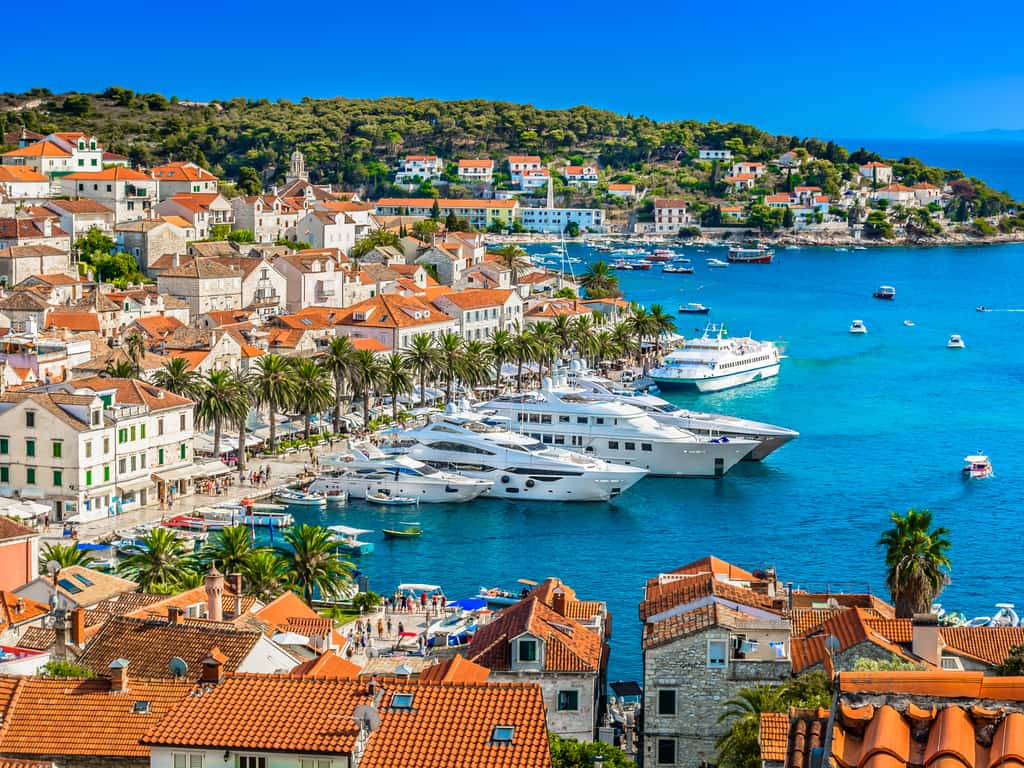
When to visit Croatia?
Croatia is beautiful for most of the year, however, summer is far and away the best! Especially the shoulder season, late May to early June or Mid September when the days are still warm, the crowds have dispersed and all the activities are open.
If you’re holidaying here between October and April you may be disappointed with the empty streets, chilly weather and lack of things to do! The buzzing coastline pretty much shuts its doors in the wintery months including taxi boats and lush coastal restaurants, so it’s best to time your visit around what you want to see and experience!
Popularity of Croatia
Croatia may be new to you and ten years ago it was still considered as the hidden gem of Europe particularly for the 30+ crowd from Austria, Germany and Hungary.
But nowadays, thanks to social media, cruise ships and a certain Game of Thrones program, Croatia has found it’s way to people’s bucket-lists, travel agents brochures and party boats! In the last few years I’ve seen the number of tourists shoot up in popular places like Dubrovnik, Split and Hvar Town – now labeled as the new party island!
First-time visitors
For first-time visitors I recommend traveling to Croatia within regions, for example, South Dalmatia, North Dalmatia, Istria, etc. – don’t try to see it all on one trip! This way you are lessening the hours of travel and expense while being able to see more in a shorter amount of time. During a recent visit, I flew to Dubrovnik and stopped by several islands along the coastline from there.
Prices
This may come as a blow as you may have assumed Croatia to be a cheap-ish holiday. But unfortunately, if you’ve booked two weeks or more along the coastline you should prepare to spend a pretty penny!
Thanks to the rising popularity of the country as a whole the prices have rocketed in this not-so-budget-friendly destination. In popular areas like Hvar Town you can expect to pay £25 upwards for a main meal, £12-£15 per gin and tonic, and £4-£5 for a coffee in Dubrovnik Square.
One thing you can do is grab accommodation deals early, avoid the July and August peak, bring your water bottle, (on occasion) swap those lavish terraces for cobbled side streets, and have the odd takeaway. (There are some delicious coffee houses, pizza, and ice-cream parlors and you will always be able to walk to a lovely viewpoint to enjoy them!)
What to expect?
You will get plenty of workouts in Croatia! The entire coastline is jagged and hilly, which is why there are so many islands in the Adriatic in the first place!
On my most recent trip to Dubrovnik, I stopped in a guest house with AMAZING VIEWS over the old town and coastline beyond, but of course, I needed to climb 6 flights of steep steps to get that view!
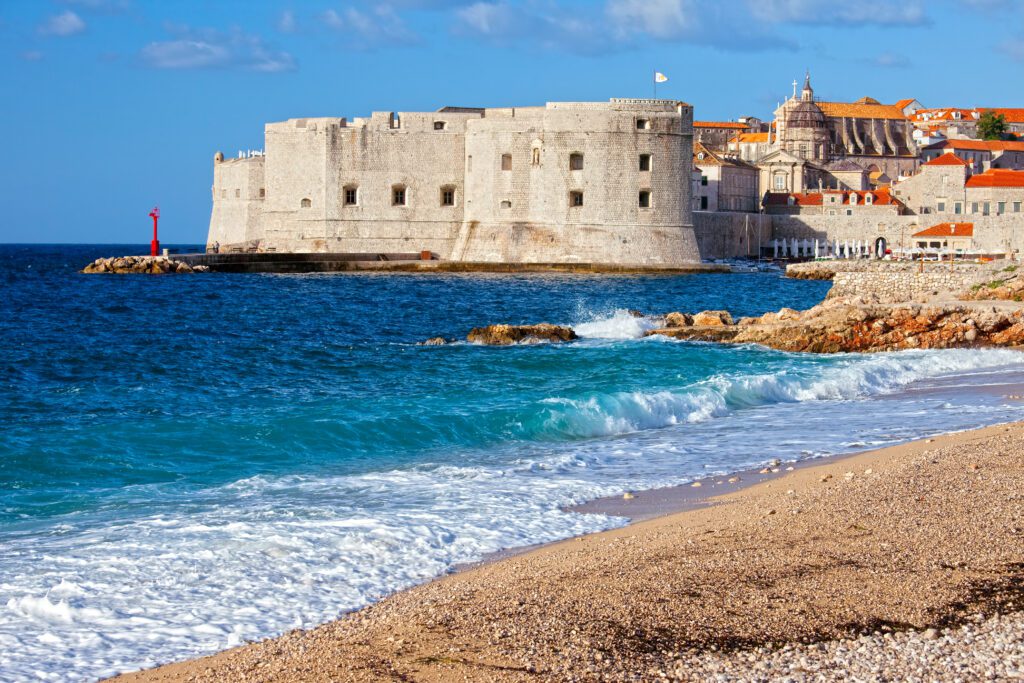
So bear this in mind when choosing accommodation, if you’re not up for this daily hill walk, book closer to the sea! Also, it’s worth knowing that the charming walled old towns are mostly inaccessible by transport and are elevated with steep inclines and cobble-stoned stairs.
Crystal-clear turquoise water dominates the entire length of the Croatian coastline – the striking images you see are all real.
This, however, is largely due to the fact that the beaches are mostly made out of rock – you will be hard-pressed to find a grain of sand on the Adriatic.
White pebble beaches, dramatic rocks, and luxury beach clubs in dreamy locations are where you will sunbathe and each has its own charm. Just remember; when traveling to Croatia you’ll need water shoes and a thick beach towel!
Rail Travel
Hopping on the train and drifting between destinations feels like the thing to do in Europe – except for Croatia, where rail tracks seem very elusive!
So far, out of my last 8 visits to Croatia, I have gotten on the train once! Traveling from Zargreb to Ljubljana in Slovenia. Croatia’s rail system is neither reliable or very useful between destinations, for this reason, buses are far better!
However, an even better way is to hire a car and explore the cute towns, national parks an some of the larger islands at your own pace!
Transport advice
Speaking of transport, in the summer months it pays to book longer buses and ferries in advance and know your routes!
Coaches and buses are frequent and run up and down the coast and near to the National Parks further inland. Just book online at least one or two days beforehand or at the booking office, especially in Dubrovnik and Split.
Traveling around the islands via catamaran is slightly more complex as the weather and months dictate the frequency and timing, which can see last-minute schedule changes! Check Jadrolinja and get by ferry websites for routes and booking.
Payments
CASH IS KING IN CROATIA
It helps enormously if you carry some notes as well as your bank cards while traveling throughout Croatia.
Plenty of restaurants and superstores accept cards, however, be prepared for smaller coffee houses, bars and local restaurants to be ‘cash only’. Sometimes you only find out when it comes to payment, which can be awkward!
Currency: The currency of Croatia is EURO from this year , there is no more KUNA
Location
Croatia is neither Eastern Europe or the Mediterranean, although parts of it feel like both! In fact, it sits squarely in the middle of South East Europe, which is technically ‘The Balkans’ or you could even narrow it down to ‘The Adriatic’ since most of Croatia hugs the coastline.
Croatia is by far and away the most lush (and expensive) if you’re looking to travel around the neighboring countries of Montenegro and Slovenia, you might be in for a surprise!
Croatian Cuisine
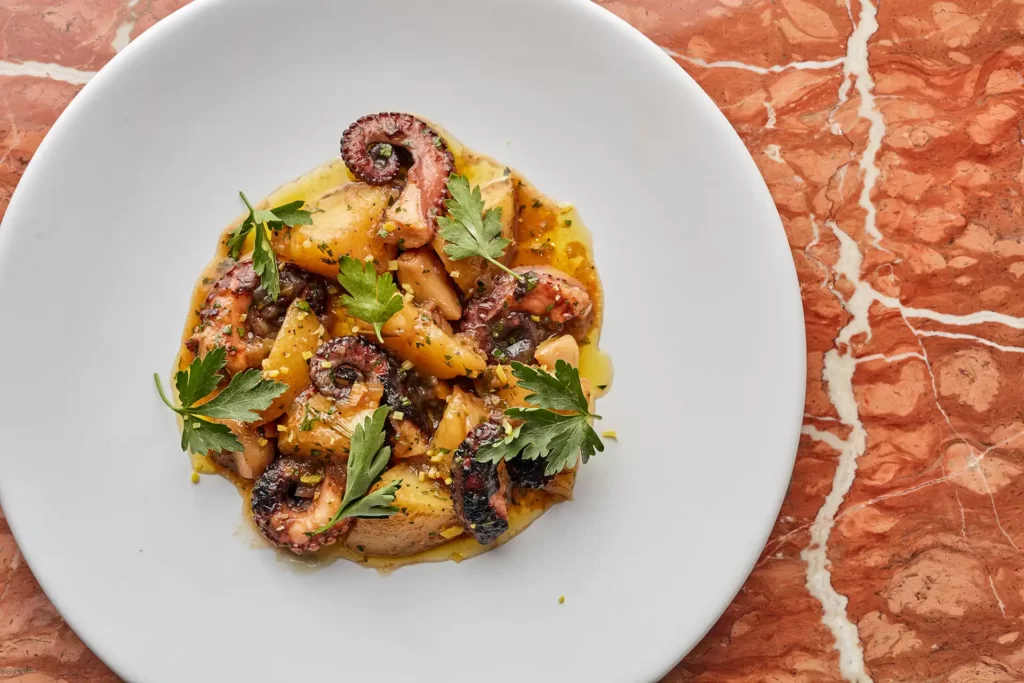
Walking around Croatia, you’d be forgiven for thinking that the local cuisine is mostly pizza and pasta! While there is a lot of influence from nearby Italy along the touristic areas in particular, the main staples of Croatia is actually more like fish, seafood, truffle risotto, lamb and swiss chard!
It’s worth knowing that each region offers something different! Pag cheese from the island of Pag, wine from Korcula and truffles from Istria!
Safety & more tips
Croatia is one of safeties country in Europe, you can explore popular national parks, islands and towns via local transport and have always felt safe and found the locals helpful – English is widely spoken in popular places.
Croatian Language: The official language is CROATIAN. English is widely spoken in touristic areas such as Split, Dubrovnik and Hvar Island.
Plugs: The standard two prong 230v European plug is used in Croatia.
Credit Cards & ATM’S: You can find ATM’s all over Croatia and most restaurants, shops and hotels accept card payments.

0 Comments